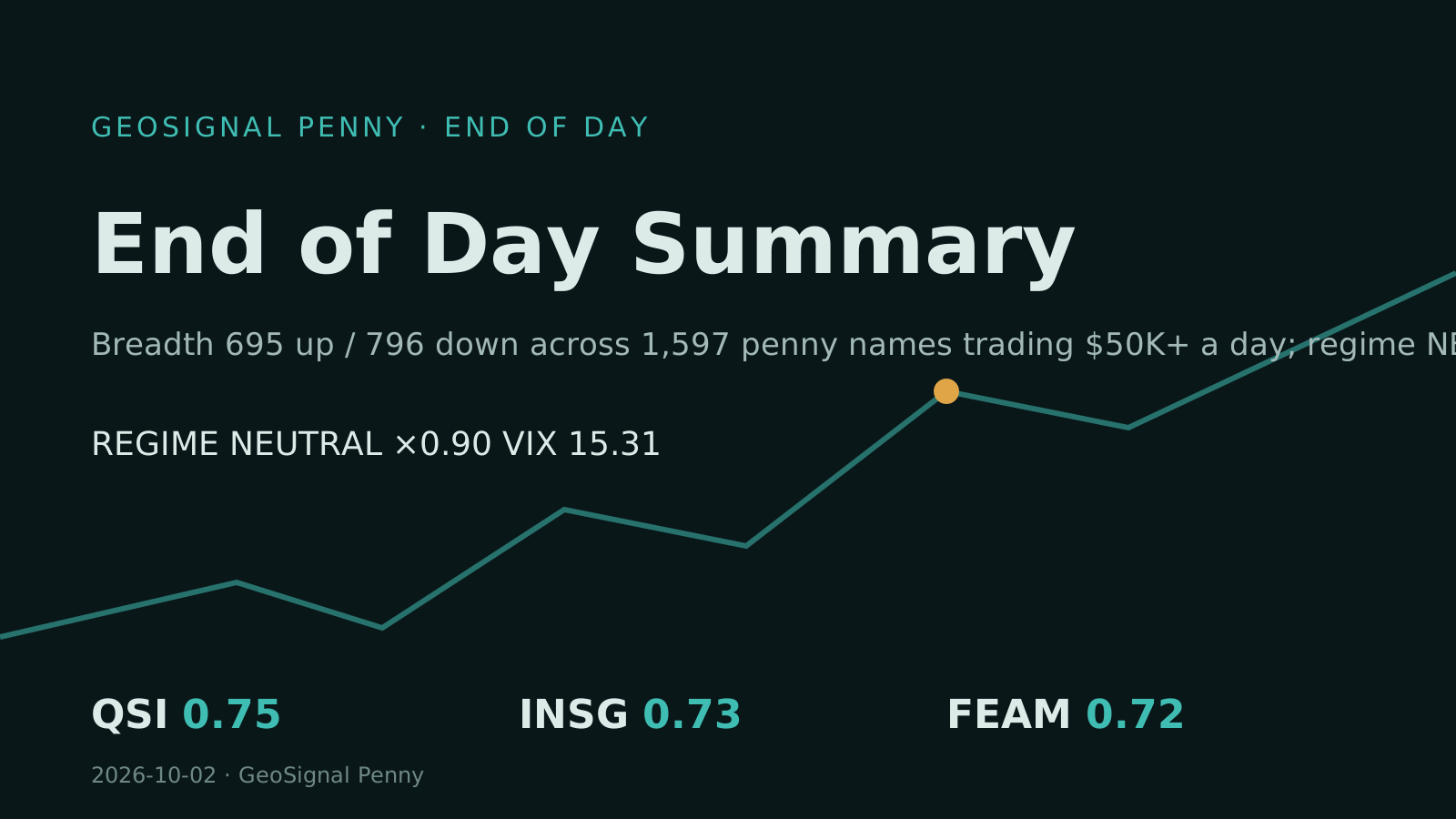
Why the End of Day Summary belongs at the center of the penny signal, in depth in the U.S. penny market, not the footnotes.
Some inputs in the U.S. penny market announce themselves. the End of Day Summary does the opposite, and that quiet is the whole lesson of the penny signal, in depth here.
Read the full piece
When it leads
Timing is everything here. the End of Day Summary leads in some regimes and fades in others, and the U.S. penny market rewards the trader who knows which is which; arrive with the wrong assumption and the same move misleads you. The scanner flags the regime. Regimes rewrite the End of Day Summary. Defensive weeks in the U.S. penny market change what volume and filings are telling you, and the live signal marks exactly when that shift is underway. In practice that means checking the regime, the confirming filing, and the one divergence that turns a glance into a real read. It also rewards a little rigor: an alert here, a filing check there, and the End of Day Summary opens up in a way the chart-only crowd never sees. The scanner's catalyst and dilution views feed this section with live detail, so what you read on the End of Day Summary stays current, not frozen at yesterday's close.
What to watch
There is a headline version of the End of Day Summary and a deeper one. the U.S. penny market keeps its best information a half-step under the price, in the filings, and the trader who drills in is the one who actually understands the penny signal, in depth. Once you're reading the End of Day Summary, resist the urge to over-fit. The useful detail in the U.S. penny market shows up in the divergences, a volume spike with no filing, a share count that keeps climbing, and each one is worth the extra look. Every read is monitorable in GeoSignal Penny Stock Trading, and the app lines up the filings so verification is one tap, not an afternoon on EDGAR. Experienced traders will tell you the same thing: read the End of Day Summary in its regime first, then weigh the confirmations, and let the U.S. penny market set the tempo. There is a free read and a professional read of this, and the membership tiers make the difference explicit, from the headline number to the full alerted workflow.
Confirming signals
Build the read around the End of Day Summary and its confirmations. The companion inputs in the U.S. penny market, relative volume, catalyst filings, dilution history, turn a single number into a thesis, and the scanner shows them side by side. A signal is never a footnote in the U.S. penny market. Around the End of Day Summary the confirming inputs tell the same story from another angle, and each one is one tap away so the full picture is immediate. The regime will rewrite the edges, which is exactly why the framework around the End of Day Summary is built to flex without breaking. Quants should note the weighting; discretionary traders should note the divergences; everyone should note the one filing most commentary on the U.S. penny market skips. Pair the End of Day Summary with the catalyst read and you have half a thesis that feels built rather than guessed.
Positioning context
Context first. The right regime lens in the U.S. penny market puts the End of Day Summary in proportion and the rest of the penny signal, in depth within reach, and the scanner keeps the history so the comparison is fair. How you weight the End of Day Summary shapes how the regime feels. Frame it within the current small-cap backdrop in the U.S. penny market and you can size conviction honestly, with the filing detail and history handled in the app. Data and alerting only. The payoff compounds: one good read on the End of Day Summary makes the next three signals in the U.S. penny market easier, faster, and better framed. Keep expectations honest, penny stocks are thinly traded and can lose most of their value quickly, but the regime windows the live signal flags turn a noisy move into a clean one. None of this is advice; it is data and alerting, and a guided walkthrough of the End of Day Summary is available in the app if you'd rather have the read explained.
A suggested read
Start with the score on the End of Day Summary, let the U.S. penny market unfold from there, volume, then filings, then share count, and keep the edges loose so the regime can revise them. The spine holds; the sub-signals flex. Anchor the analysis on the End of Day Summary and let the confirmations in the U.S. penny market follow without forcing them. The sequence does the work, which is the whole point of the penny signal, in depth done well. A useful habit is to write down what would prove the read wrong before you act on it, then check that level against the live board. The scan keeps the inputs public on purpose: a filing date, a share count and a closing price can all be checked in a minute. Most false starts in the U.S. penny market come from reading one input in isolation; the score exists so three inputs are read together.
Costs & access
Access is a dial, not a wall. In the U.S. penny market, the End of Day Summary can be a glance or a deep, alerted workflow, and the membership tiers make the choice explicit so there are no surprises. the End of Day Summary spans a free read to a professional tier: the headline number is open, the full scanner and custom alerts sit in the paid tiers, and you pick the level. Everything is monitoring, not advice. When the regime changes, yesterday's ranking is a starting point and nothing more, so the scan re-scores every name on every run. Liquidity is the quiet input. A strong-looking chart on thin volume can be impossible to exit at the price you see. Filing reliability rewards companies that report on time and on schedule, which says something about how they are run.
Common mistakes
A few hard-won notes: don't chase the percentage, don't ignore the filings, and let the End of Day Summary set the weighting rather than the message boards. In the U.S. penny market the traders who slow down are the ones who stay out of the pumps. The error experienced traders warn about: reading the End of Day Summary without its regime, and mistaking one volume spike for a trend. Small discipline, outsized payoff for the penny signal, in depth in the U.S. penny market. A catalyst filing can lift a score for a few sessions, but the overlay is bounded so no single headline dominates the read. Comparing a name with its peers that filed the same kind of 8-K shows whether the reaction is unusual or ordinary. The scan treats a missing input as missing, not as a zero, so a thin record is labeled rather than guessed.
Nearby signals
Give yourself room to widen the lens from the End of Day Summary. The adjacent signals in the U.S. penny market are where the penny signal, in depth turns from a number into a thesis, and every one is on the same scan. the End of Day Summary rarely stands alone. The surrounding signals of the U.S. penny market reward an extra minute, a filing cross-check, a liquidity read, and the framework is built to absorb them without unraveling. Watching how many STRONG names survive a defensive week is one of the clearest tells of how healthy the U.S. penny market really is. Share-count growth year over year is often the first visible sign that financing, not operations, is driving the stock. Reading the same name across morning, close and weekly editions shows whether a move has staying power or was a one-day event.
The bottom line
See the End of Day Summary, understand it, set the alert. That is the U.S. penny market distilled, and the reason this piece leads with it rather than burying it under the day's hype. Data and alerting only; not investment advice. If you remember one thing about the penny signal, in depth in the U.S. penny market, let it be the End of Day Summary: read in context, weighted by regime, cut for dilution, and fully monitorable from one screen.
Why it matters
Every strong read needs an anchor, and in the U.S. penny market that anchor is the End of Day Summary. Understand what it measures and why it persists, and the rest of the penny signal, in depth falls into a natural order around it. the End of Day Summary is not a box to tick in the U.S. penny market; it is the piece that makes the rest legible. Give it real attention and the penny signal, in depth stops feeling like a scramble and starts feeling like a framework you built on purpose.
How it's built
The construction of the End of Day Summary is half the insight: the weighting, the filings behind it, and the regime multiplier decide what it reacts to and when. Knowing that, and which companion signal confirms it, saves you from trading noise. Read the End of Day Summary the way you'd read a model, not a tip. In the U.S. penny market the difference between a real move and a pump is method, and every input is a public filing or a public quote, so nothing is taken on faith.
“In the U.S. penny market, the End of Day Summary is where the thesis earns its keep.”
GeoSignal Penny Stock Trading keeps it actionable as monitoring: see the End of Day Summary, understand it, and get alerted when it moves. Data and alerting only.